Choosing a rehab in Bali
Non-12-step rehab in Bali.
Most rehabs in Bali are built around the 12 steps. For many people that works. If it hasn’t worked for you, or doesn’t feel right, here’s what the alternatives look like and how to find them.
“Non-12-step” is one of the most common things people search for when they’re looking at rehab in Bali. Usually it’s because they’ve tried a 12-step programme before, or because the spiritual language doesn’t sit right with them, or simply because they want something built around them rather than a set model.
I’ll be honest about where I stand, because it isn’t a simple answer. The 12 steps played a huge part in my own recovery. I took a lot from them, and the community in those rooms is massive. I have deep gratitude for them.
I’ve also spent years working in this field, and from a trauma perspective I can see their limits. Meetings aren’t clinically informed and they aren’t run by therapists. They can trigger a lot in people. And they aren’t the only route to sobriety. I’ve helped people who found a home in the programme and people who never did. I don’t want to brush past that second group. Their stories matter just as much as the ones who found recovery in those rooms.
The research backs both sides. A Cochrane review of 27 studies found manualised AA and twelve-step programmes led to more continuous abstinence than other established treatments (Kelly et al., 2020). And a US study following more than 600 people with alcohol problems found SMART Recovery, LifeRing and Women for Sobriety worked as well as 12-step groups once you accounted for people’s goals (Zemore et al., 2018). So it’s about finding the right fit, not picking a winner.
What the 12-step model is
The 12 steps come from Alcoholics Anonymous. They frame addiction as something you can’t control on your own, and recovery as a process of working through twelve steps with a sponsor and a group, often with a spiritual element. Many residential programmes use the steps as their backbone: daily groups, step work and introductions to AA or NA meetings.
The main alternatives
CBT and DBT
Cognitive behavioural therapy looks at the thoughts and patterns that lead to using, and practises new responses. DBT adds skills for strong emotions. Both are widely studied and used in addiction treatment.
SMART Recovery
A science-based, self-empowering alternative to the 12 steps, with free meetings online and in many countries. It focuses on motivation, coping with urges, and building a balanced life.
Trauma-informed and somatic work
For many people, drinking or using started as a way to cope with something painful. Trauma-informed care works with that root, often including body-based approaches that help the nervous system settle.
Peer support
Support from people with lived experience of recovery, without a fixed set of steps. Being genuinely accompanied by someone who has been there is one of the things people most often credit for lasting change.
Individual plans
Some programmes don’t follow any single model. They assess each person and combine approaches, which can include the 12 steps for people who want them.
How to tell which approach a centre uses
Websites often describe programmes as individual or whole-person even when the day runs on the steps. A few direct questions will tell you more:
- What does a typical day look like, hour by hour?
- Is step work part of the programme? Is it optional?
- Which therapies are used, and who delivers them?
- How is my plan different from someone else’s?
- What support do you recommend after I leave: AA and NA, SMART Recovery, or something else?
Who each tends to suit
The 12 steps often suit people who value structure, community and a spiritual frame, and who will keep going to meetings at home. Non-12-step approaches often suit people who want to understand why they drink or use, who connect more with therapy than with the steps, or for whom a previous 12-step programme didn’t hold. Many people end up using a bit of both.
That’s how I see it too. Recovery means grabbing whatever you can. Don’t rest your sobriety on one thing. Meetings, therapy, community, moving your body: you need more than one.
What the steps don’t reach
My honest take is that the steps are very focused on the substance and the behaviour. Yes, they get you working through resentments and character defects. But understanding your past, building awareness of trauma, of the things that happened that made you see the world a certain way or think less of yourself: they don’t really go there.
Carl Jung was asking the deeper question before the 12 steps existed. He treated an alcoholic patient in the years before AA was founded, and in 1961 he wrote to Bill Wilson, AA’s co-founder, that the craving was a low-level form of “the spiritual thirst of our being for wholeness” (Jung, 1961). He wasn’t asking how to stop the drinking. He was asking why. Why the need to escape? Why bury yourself in work? What is it in ourselves that we don’t want to sit with?
Safety first, whichever you choose
If you’re physically dependent on alcohol, benzodiazepines or opioids, the first step is a medically supervised detox, whatever the programme’s philosophy. Our guide to nine red flags before you book covers what to check, and so does our guide to choosing a rehab in Bali.
Where NAWA fits
Every rehab and detox unit I’ve worked in did the same thing: filled the place up, then gave everyone the same programme and treated everyone the same. But everyone’s route to sobriety is completely individual. And not everyone wants to share their pain with a room of 30 people. They shouldn’t have to.
NAWA isn’t a rehab and doesn’t provide detox. It’s a four-week sober retreat for four people on Awera Island in the Mentawai Islands, for people who are medically stable or have completed detox. It isn’t built on the 12 steps. Life on the island runs on lived-experience peer support, one-to-ones, daily practice and body-based work, with a therapist and psychiatrist online. When you go home, we connect you with whatever support suits you, whether that’s AA, NA, SMART Recovery or a local therapist.
What the island gives you is what Jung was pointing at: time to be still, sit with yourself and welcome the uncomfortable stuff, with four people around you instead of thirty. Read our philosophy.
Sources
- Kelly JF, Humphreys K, Ferri M. Alcoholics Anonymous and other 12-step programs for alcohol use disorder. Cochrane Database of Systematic Reviews, 2020.
- Zemore SE et al. A longitudinal study of the comparative efficacy of Women for Sobriety, LifeRing, SMART Recovery, and 12-step groups for those with AUD. Journal of Substance Abuse Treatment, 2018.
- Jung CG. Letter to William G. Wilson, 30 January 1961 (transcribed by WCCM).
Questions
Are there non-12-step rehabs in Bali?
Yes. Most Bali rehabs use the 12 steps, but some offer individual or non-12-step programmes based on approaches such as CBT, DBT, trauma-informed care and peer support. Ask each centre what a typical day involves and whether step work is optional.
What is the alternative to the 12 steps?
Common alternatives include cognitive behavioural therapy (CBT), dialectical behaviour therapy (DBT), SMART Recovery, trauma-informed and somatic therapy, and peer support without a fixed set of steps.
Is non-12-step rehab effective?
Approaches such as CBT are widely studied and used in addiction treatment. What matters most is a good fit, safe medical care where needed, and support after you leave.
Is NAWA a 12-step programme?
No. NAWA is a sober retreat, not a rehab. It runs on lived-experience peer support, one-to-ones and daily practice, with a therapist and psychiatrist online. We connect you with AA, NA, SMART Recovery or a therapist at home, whichever suits you.
Last updated 4 November 2026
More guides


Free PDF guide · 17 pages
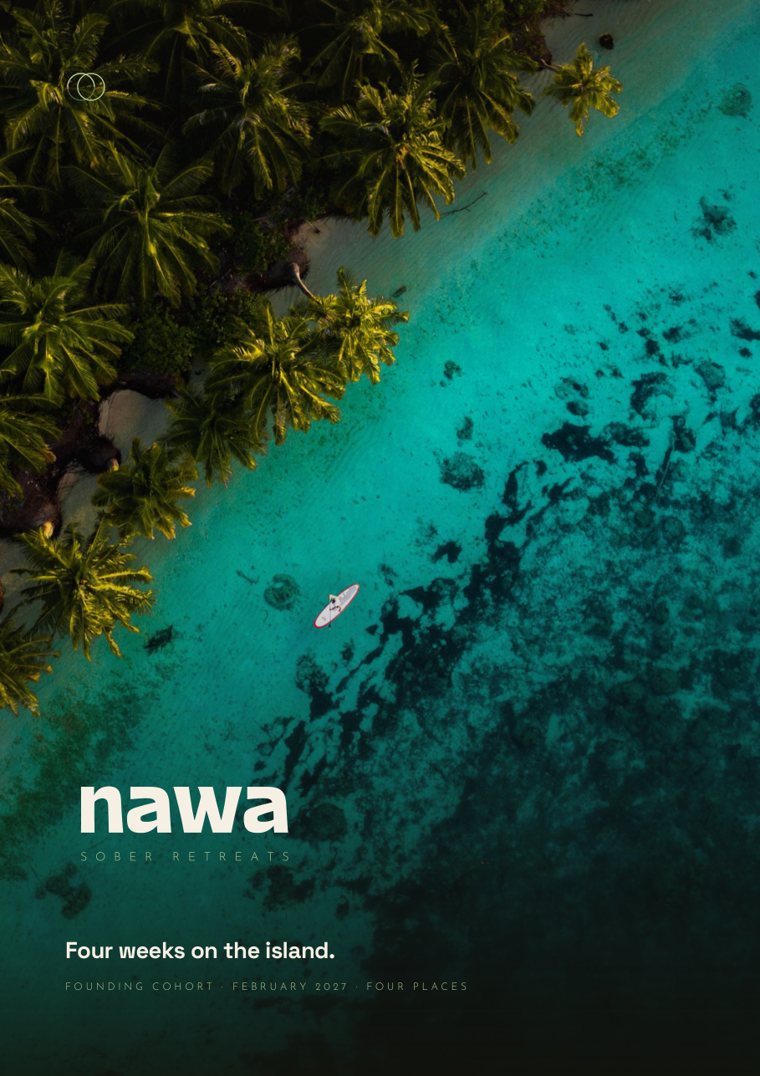
Download the programme guide.
Read it first, in your own time: Rick’s story, the island, the four weeks, surf, what’s included and who it’s for. Pop your email in and the download opens straight away. No call, no pressure.
It starts with a conversation.
Book a free call →A private, confidential call with Rick himself. Just a relaxed, honest chat about where you’re at.
or email hello@nawarecovery.com · WhatsApp +62 851 9075 3013